AI Product Photography: Fix Photos Costing You Sales
Studies show that 75% of online shoppers rely on product photos when making purchase decisions. If your images aren't professional-quality, you're leaving revenue on the table. Here's how AI enhancement changes the economics.
The Product Photo Problem
Here's a stat that should concern every e-commerce brand: 93% of consumers consider visual appearance to be the key deciding factor in a purchase decision. Yet the majority of small and mid-size e-commerce businesses are using subpar product photography that actively damages their brand perception. In a crowded digital marketplace where shoppers cannot physically touch or inspect your items, your product image *is* your product.
The logistical nightmare of traditional product photography is the primary reason for this visual quality gap. A standard commercial photoshoot isn't just a matter of snapping a few pictures. It requires an agonizing sequence of events: moodboarding, hiring a photographer, securing a studio space equipped with cycloramas and strobes, shipping physical inventory, hiring stylists, and finally, managing weeks of post-production retouching.
The financial constraints alone are staggering when you break them down:
- Professional product photography natively costs $25-$100+ per image for basic white-background shots, and significantly more for lifestyle compositions.
- A typical catalog of 200 products needs 800-1,600 images to properly showcase multiple angles, contextual uses, and deep textures.
- That's $20,000-$160,000 in photography costs alone—a capital expenditure that drains marketing budgets before a single ad is even placed.
- Seasonal updates, new arrivals, out-of-stock variations, and marketplace-specific formatting multiply this base cost exponentially every fiscal quarter.
For most businesses, this traditional math simply doesn't work. So, founders and marketers are forced to compromise. They resort to smartphone photography, poorly lit warehouse shots, inconsistent color balances, and cluttered backgrounds that distract from the SKU being sold. The resulting visual merchandising looks cheap, which instantly trains the modern consumer to assume the actual product is cheap, too. Every single one of those compromises reduces conversion rates, increases customer acquisition costs, and drives prospective buyers straight to competitors who invested in high-end visuals.
The Conversion Impact
Research from Shopify, Amazon, and independent e-commerce studies consistently paints a stark picture: you cannot scale an online business with amateur visuals. Highly optimized product galleries aren't a luxury; they are baseline trust signals required to compete in modern digital retail.
- Products with professional-grade photography convert 30-40% higher than those with amateur photos, regardless of the product category.
- Pure white background product images (RGB 255, 255, 255) are not just aesthetically pleasing—they are algorithmically required by major players like Amazon and Google Shopping, consistently performing best across all paid media marketplaces.
- Listings containing 5 or more high-resolution images sell roughly 2x more than listings with only 1-2 images. Consumers want macro shots, scale references, and multiple angles.
- Lifestyle context images (showing the product actively in use) increase a shopper's perceived value of the item by 20-30%, bridging the gap between digital browsing and physical ownership.
Beyond just driving the initial sale, visual asset quality directly impacts your bottom line through return rates. The National Retail Federation estimates that nearly 22% of all e-commerce returns are caused by items looking drastically different in person than they did on the website. Poor lighting, inaccurate color grading, and low-resolution images that prevent mobile "pinch-to-zoom" functionality lead to mismanaged customer expectations.
When you elevate your product photography, you aren't just boosting top-of-funnel click-through rates; you are actively lowering your post-purchase return costs. The gap between amateur and professional product photos is entirely quantifiable, directly measurable in lost revenue and bloated customer service tickets.
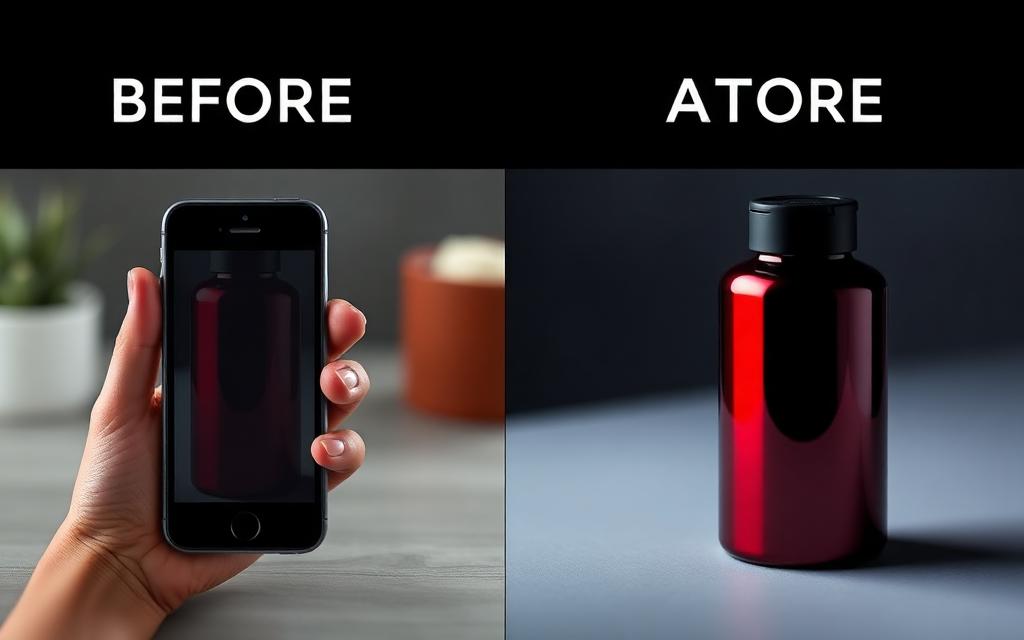
The E-Commerce Editing Workflow: Before & After AI
To truly understand the value of AI image generation, you have to look at how much friction exists in the traditional post-production workflow. Before modern artificial intelligence, preparing a single product image for an online catalog required advanced knowledge of complex graphic design software and hours of tedious manual labor.
In a traditional post-production pipeline, a retoucher must manually draw "clipping paths" using the pen tool in Adobe Photoshop to painstakingly separate a product from its background. If the product has complex edges—like faux fur, transparent glass, or intricate jewelry clasps—this process can take upwards of thirty minutes per photo. After the background is removed, the retoucher must manually paint in realistic drop shadows or reflections so the item doesn't look like an unnatural "floating" sticker. Next comes color correction in Adobe Lightroom to ensure the red of a dress matches the exact hex code of the fabric, followed by manual blemish removal to clean up dust and scratches native to prototype SKUs.
By contrast, an AI-powered editing workflow eliminates this manual friction entirely. Platforms equipped with specific use-cases for ecommerce can automate the entire post-production pipeline in seconds. Instead of outsourcing thousands of raw image files to offshore retouching agencies and waiting two weeks for delivery, an e-commerce manager can upload raw smartphone photos directly into an AI generator. The AI instantly isolates the subject, reconstructs perfect studio lighting, generates algorithmically accurate drop shadows, and exports the final file in web-ready formats. A post-production workflow that previously took three weeks and cost thousands of dollars is now completed during a lunch break.
How AI Enhancement Works
AI media enhancement takes your existing product photos — even casual phone snapshots taken against a messy office wall — and transforms them into professional-quality digital assets. It doesn't just crop the photo; it structurally understands the geometry, lighting, and context of your item. The comprehensive pipeline systematically handles:
Background Replacement
Remove cluttered, distracting backgrounds with a single click and replace them with conversion-optimized environments. Need a seamless white background for Amazon compliance? Done. Need that same product resting on a sun-drenched marble countertop for an Instagram campaign? AI generates the environment around your product, respecting natural perspective and light sources. One single raw product photo seamlessly transforms into dozens of unique, marketplace-ready variants tailored specifically for diverse marketing channels.
Lighting Correction
Fix uneven shadows, harsh flash highlights, and yellow indoor color casts automatically. Traditional photography requires hours of tweaking softboxes and bounced light to avoid glare. AI natively understands how three-dimensional products should be lit in a high-end commercial studio setting. It algorithmically adjusts the micro-contrast, balances the exposure, and re-lights the image to match global studio-quality standards, making flat lighting appear deep, rich, and naturally voluminous.
Detail Enhancement
Super-resolution AI allows you to sharpen fine product details, enhance physical textures, and significantly improve image clarity without introducing the pixelated artifacts typical of standard editing software. If you uploaded a slightly blurry, 720p photo of a leather bag, the AI reconstructs the grain of the leather and the sheen of the hardware, upscaling the image to crisp 4K resolution. The product looks exactly as it does in person, but professionally photographed, allowing your customers to confidently utilize zoom features.
Model Insertion
Executing a lifestyle shoot with human models introduces casting calls, agency fees, makeup artists, and location scouting. AI model insertion allows you to place your clothing directly onto highly realistic virtual models, or place your consumer packaged goods into dynamic, humanized hands—all without an actual photo shoot. You can instantly generate diverse lifestyle shots that look completely indistinguishable from real photography, allowing you to A/B test different demographics, skin tones, and styling choices to see what resonates best with your target audience.
Format Optimization
Stop manually cropping and exporting twenty different versions of the same file. AI architecture can generate all the necessary digital formats you need from a single source image. You instantly receive a 1:1 square for your Shopify grid, a 4:5 vertical crop for Pinterest boards, a 9:16 format for TikTok and Instagram Reels, wide-aspect ratios for website hero banners, and tightly cropped white-background versions for Google Merchant Center. For high-volume catalogs, you can integrate directly via our developers API to batch-process thousands of SKUs overnight.
Scaling Beyond Images: AI Storefronts and Print-on-Demand
Upgrading your visual assets is only the first half of the e-commerce equation; the real magic happens when you pair flawless imagery with immediate, frictionless monetization. Too many brands spend thousands of dollars generating incredible social media assets, only to send that hard-earned traffic to clunky, slow-loading websites with poor checkout experiences. High-quality imagery needs to live natively inside high-converting environments.
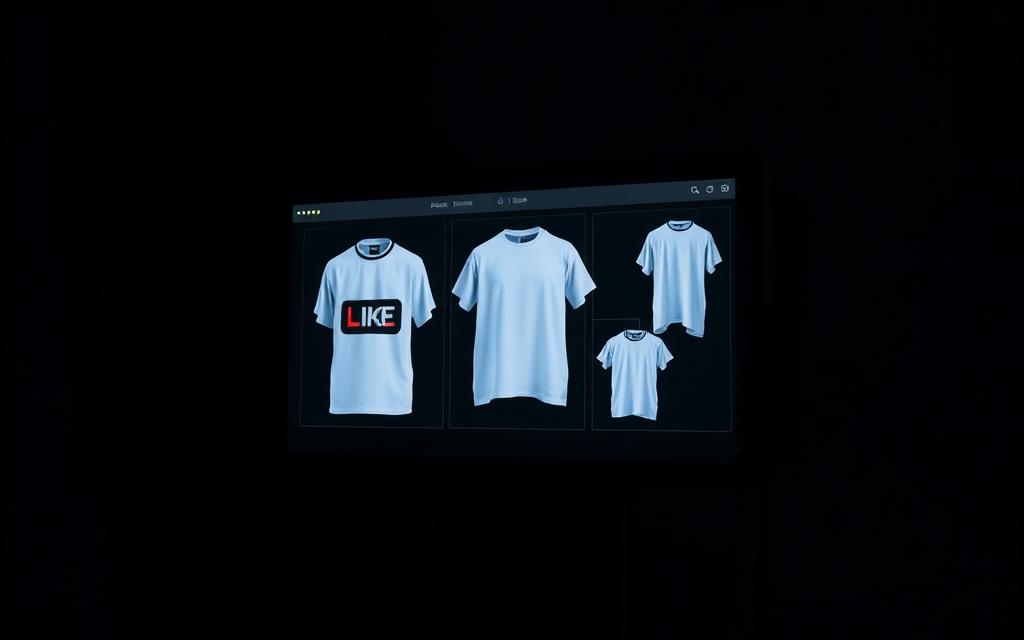
This is where integrating your enhanced visuals into modern, customized infrastructure becomes a superpower for digital brands. Utilizing AI to generate hyper-realistic mockups for Print-on-Demand (POD) merchandise allows you to launch entirely new product lines in days rather than months. Instead of paying upfront for thousands of t-shirts, mugs, or canvas prints, you can use AI to digitally wrap your designs around photorealistic blanks placed in lifestyle environments.
By pushing these enhanced POD images directly to custom storefronts, creators, influencers, and boutique brands can scale their businesses with zero inventory risk. The AI doesn't just make the t-shirt look real; the integrated storefront captures the sale, handles the transaction, and routes the order to the printing facility seamlessly. This end-to-end ecosystem allows a brand with zero physical products and zero traditional photography budget to look—and operate—like a multi-million dollar retail empire constraint-free.
The Economics
Let's do a forensic breakdown of the actual costs to bring a 200-product catalog to market, comparing the legacy approach to the modern generative AI pipeline.
Traditional Photography
- Photographer & Studio Day Rates: $1,500/day (minimum 3 days required)
- Post-Production Retouching: $35 per image (800 images) = $28,000
- Shipping, Props, and Insurance: $2,500
- Total Initial Cost: $35,000 - $40,000
- Timeline: 4-6 weeks of communication, shipping, shooting, and revising.
- Seasonal refresh: Another $40,000 required every time a new collection drops or seasonal styling (like holiday themes) is needed.
AI Enhancement
- Processing Cost: 800 images × $0.12/image = $96
- Labor: Handled internally by existing staff in a fraction of the time.
- Total Initial Cost: $96
- Timeline: 1-2 hours of targeted batch processing.
- Seasonal refresh: Another $96, generated instantly on demand. Check our flexible pricing to see how volume discounts make this even more affordable.
That's an astonishing 99.7% cost reduction with comparable—and often strictly superior—output quality. You are effectively reclaiming $39,900 of operating capital that can be immediately reallocated directly into profitable ad spend, influencer partnerships, or product development.
What to Enhance First
If you're sitting on hundreds or thousands of legacy SKUs, the prospect of updating your entire catalog can feel paralyzing. If you're starting with AI enhancement, don't try to boil the ocean on day one. Prioritize your asset generation strategically:
- 1.Best-selling products (Top 20%): Start with the products that already drive your core revenue. These SKUs have the highest immediate ROI for improved imagery. A mere 2% conversion bump on a hero product yields massive revenue gains.
- 2.Current active Ad campaigns: Social media users scrolling through Instagram or Facebook make split-second visual judgments. Enhanced, lifestyle-context product shots perform significantly better in paid media environments, radically lowering your Cost Per Click (CPC).
- 3.Marketplace listings: Platforms like Amazon, Etsy, and Wayfair utilize algorithms that actively reward high-resolution, compliant imagery with higher organic search placement. Upgrade your main gallery images here to immediately climb the search rankings.
- 4.New arrivals and launches: Make a dominant first impression from launch day. Never launch a new product using "temporary" or "placeholder" phone photos. Use AI to launch with a polished, luxury brand aesthetic right out of the gate.
For a deeper dive into crafting standard operating procedures for your visual catalog, check out our extensive guides and case studies on our blog.
Real Results
The theoretical benefits of AI imagery are impressive, but the real-world metrics are what truly matter to e-commerce operators. Brands actively utilizing GetSupermodel's enhancement pipeline report sweeping improvements across their entire marketing funnel.
DTC brands testing AI-generated lifestyle images against legacy white-background shots report a 35% average increase in click-through rates on highly competitive marketplace listings. When consumers see a piece of furniture in a beautifully sunlit living room rather than floating in a white void, they are fundamentally more likely to click.
Once on the site, merchants are seeing a 22% increase in overall cart conversion rates after fully upgrading bad product imagery. Trust signals are restored, and the customer no longer hesitates out of fear that the product is a cheap knock-off. At an operational level, creative teams report a massive 60% reduction in time spent on overall product photo preparation and an over 90% reduction in structural photography costs, allowing lean teams to operate with the creative output of a massive enterprise agency.
*Upload your product photos and see the enhancement in seconds. Try Supermodel free — your first 50 generations are on us.*
--
Frequently Asked Questions
How does AI product photography streamline the process of creating visuals for e-commerce?
AI product photography fundamentally removes the physical bottlenecks associated with traditional e-commerce content creation. In a standard workflow, businesses lose weeks scheduling studios, shipping physical inventory, hiring specialized talent, and executing manual clipping paths for post-production. AI platforms bypass this entirely by instantly generating photorealistic visualizations, perfect studio lighting, and compliant backgrounds from a single casual smartphone upload or 3D model. Features like automated batch processing allow teams to render hundreds of SKUs overnight in exact aspect ratios for Shopify, Amazon, or Instagram. This real-time rendering capability slashes a six-week production timeline down to merely a few hours, dramatically reducing overhead costs while keeping visual asset pipelines agile.
Can using AI for product photos improve conversion rates for online stores?
Absolutely. Upgrading to AI-enhanced product photos directly targets the visual trust signals that modern consumers demand, which drastically improves online store conversion rates. Shoppers cannot physically touch e-commerce products, meaning low-resolution, poorly lit images automatically trigger suspicion and high bounce rates. AI corrects these conversion-killers by upscaling pixel density for flawless "pinch-to-zoom" mobile viewing, reconstructing natural drop-shadows, and balancing color accuracy so the product accurately represents physical reality. Furthermore, AI rapidly generates contextual, hyper-realistic lifestyle scenes that help consumers visualize the product in their own lives. These optimized, high-fidelity galleries drastically reduce cart abandonment and minimize post-purchase return rates caused by misleading amateur photography.
What are the benefits of using AI for product image enhancement in existing product catalogs?
Applying AI image enhancement to an existing product catalog allows e-commerce brands to effortlessly rescue legacy visual assets without funding highly expensive reshoots. Over years of operation, brands often accumulate disjointed catalogs featuring lighting inconsistencies, varying out-of-date aesthetics, and non-compliant background clutter. AI acts as an instantaneous visual equalizer. It automatically standardizes complex lighting, deepens textures, removes distracting background artifacts, and establishes a cohesive, luxury brand identity across every single SKU. Additionally, older images can be instantly resized, upscaled to 4K resolution, and optimized for modern platform-specific aspect ratios that may not have even existed when the original photos were taken, maximizing digital asset longevity with virtually zero manual editing required.