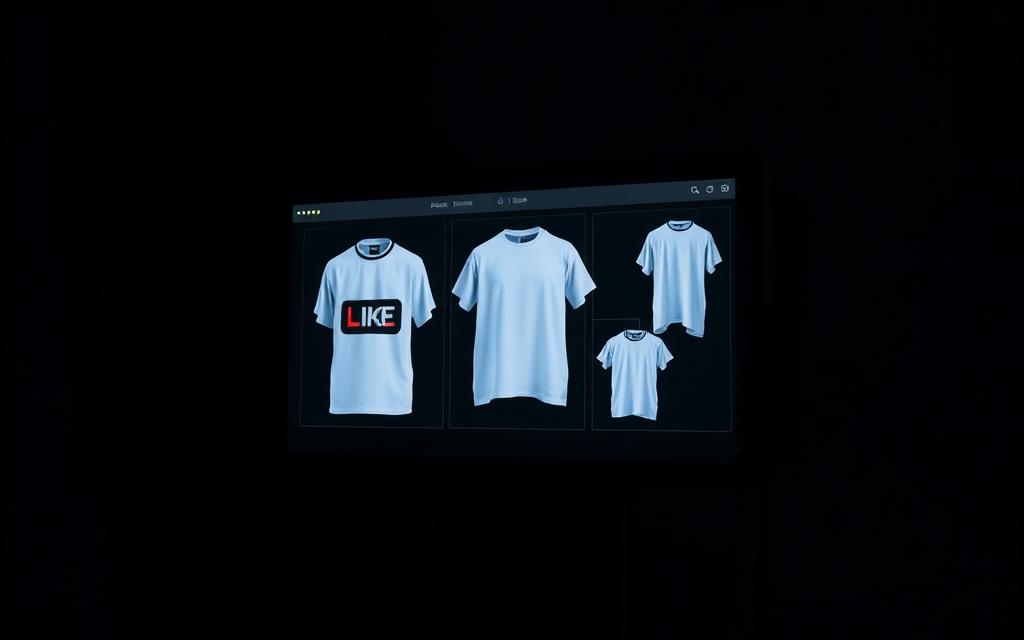
AI Product Photography vs Traditional Studios: A Cost and Quality Comparison for 2026
Traditional product photography costs $500-$5,000 per shoot. AI alternatives deliver comparable quality for a fraction of the price. Here's the full breakdown.
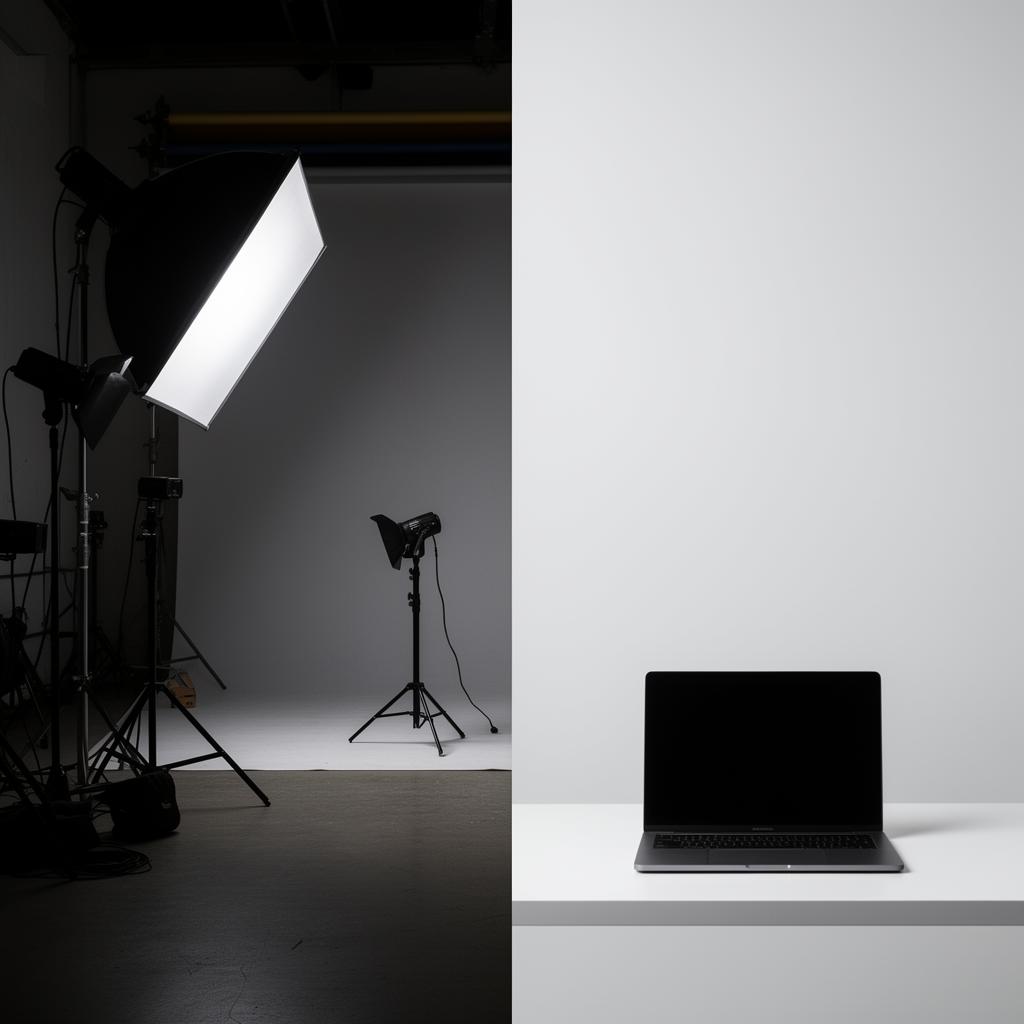
The Next Era of Visual Commerce: Navigating the 2026 Landscape
In the hyper-competitive e-commerce environment of 2026, the digital storefront has completely replaced the physical window display. Across major markets including the US, UK, Canada, and Australia, consumers demand more than just standard product shots; they expect immersive, ultra-high-definition, emotionally resonant visual experiences. A brand's visual identity directly dictates its conversion rate, customer trust, and ultimate bottom line.
At the center of this visual revolution is a pivotal operations decision every modern brand must make: the choice between AI product photography and the traditional photography studio. As artificial intelligence has matured from a novelty into an enterprise-grade utility, the e-commerce playbook has been fundamentally rewritten. AI-powered platforms like Supermodel have introduced capabilities that were science fiction just half a decade ago, combining generative AI, sophisticated image/video enhancement, and direct print-on-demand merchandising into a single workflow.
But does artificial intelligence truly match the nuanced quality of a seasoned human photographer and a physical set? And how do the bottom-line numbers actually compare? In this comprehensive guide, we will execute a deep dive into the AI vs traditional photography debate, analyzing the staggering differences in product photography cost, workflow momentum, and visual fidelity to help your brand optimize its visual strategy for 2026 and beyond.
What is AI Product Photography in 2026?
To understand the scope of the shift, we must first define what AI product photography entails in its modern form. Previously, "AI photography" meant awkward background removal tools or simplistic, often flawed generative fills. In 2026, it represents an entirely synthesized, photorealistic staging environment powered by advanced neural rendering.
Modern AI photography platforms allow you to take a basic, poorly lit smartphone snapshot of a product—or even just a 3D CAD file—and instantaneously transform it into a breathtaking, magazine-quality lifestyle image. The AI intelligently reads the product's geometry, fabric, texture, and text, calculating hyper-realistic lighting, shadows, and reflections.
Want to see your new line of vegan leather handbags resting on a sun-drenched marble table in Santorini? Or perhaps modeled by an array of diverse, photorealistic AI-generated models reflecting different target demographics across Sydney, London, and Toronto? AI makes this possible in seconds. By utilizing a cutting-edge AI generator, brands can bypass physical constraints entirely, creating infinite variations of a single product without ever booking a flight or paying a location fee.
Furthermore, this technology isn't just about generation; it's heavily reliant on enhancement. Upgrading a low-res supplier image into a crisp 8K hero banner is now a fundamental pillar of modern ecommerce photography.
Traditional Product Photography Studios: The Old Guard
Before diving into the direct comparisons, it is important to acknowledge the merits and mechanics of the traditional e-commerce photography studio. For decades, this has been the gold standard for producing visual assets.
A traditional shoot involves a complex, highly coordinated supply chain of talent and logistics. To execute a high-quality campaign, a brand must align:
* The Creative Team: Art directors, lead photographers, lighting assistants, and digital techs.
* The Talent: Professional models, hair and makeup artists, and wardrobe stylists.
* The Logistics: Studio rental, location scouting, securing shooting permits, and catering.
* The Physical Products: Manufacturing prototypes, shipping them to the studio, and ensuring they arrive undamaged.
* The Post-Production: Extensive manual retouching, color grading, and formatting for various digital platforms.
There is undeniable value in the tactile nature of traditional photography. For ultra-luxury brands selling $50,000 bespoke mechanical watches, the subtle, organic imperfections and millimeter-perfect control of physical macro photography can still justify the immense overhead. A master photographer brings a human intuition to the set that AI is only just learning to replicate.
However, for 99% of e-commerce brands, dropshippers, and print-on-demand creators, this exhaustive traditional process creates massive bottlenecks. The logistics take weeks to organize, and the sheer capital required represents a major barrier to scaling operations, especially when expanding into multiple international territories.
Breaking Down the Numbers: A 2026 Product Photography Cost Analysis
When evaluating these two methodologies, the most dramatic divergence appears on the spreadsheet. The product photography cost associated with traditional studios has only inflated over the last few years due to rising commercial real estate costs and freelance rates in Western markets. Let’s look at the hard data.
The Traditional Studio Cost Breakdown (US / UK / CA / AU averages)
If a mid-sized apparel or lifestyle brand wants to shoot 50 new SKUs in 2026, they are looking at a substantial capital expenditure. Average rates across major hubs (New York, London, Toronto, Melbourne) reflect the following:
* Studio Rental: $600 to $1,500 per day.
* Lead Commercial Photographer: $1,000 to $3,000 per day.
* Professional Models (2-3): $1,200 to $2,500 per day, plus agency fees (often an additional 20%).
* Hair, Makeup & Wardrobe: $800 to $1,500 per day.
* Prop Styling / Set Design: $500 to $2,000 (including material costs).
* Product Shipping and Insurance: $200 to $500.
* Post-Production/Retouching: $25 to $75 *per image*. Assuming 4 images per SKU (200 images), this adds $5,000 to $15,000.
Total Traditional Cost for 50 SKUs: Conservatively, a full-scale professional shoot for a medium-sized catalog will cost between $9,500 and $25,000 USD (approximately £7,500 - £20,000 GBP, or $14,000 - $37,000 CAD/AUD).
When you break that down, you are paying roughly $190 to $500 per final SKU.
The AI Product Photography Cost Breakdown
Contrast this with the financial architecture of AI-driven visual commerce. Platforms like Supermodel operate on software-as-a-service (SaaS) or compute-token models, drastically socializing the cost of high-end visuals.
* Studio Rental: $0. (The studio is the cloud).
* Photographers & Models: $0. (Generated via advanced neural algorithms).
* Prop Styling & Locations: $0. (Prompt-based environmental staging).
* Post-Production: Included in the generation/enhancement process.
Instead of paying tens of thousands of dollars, businesses subscribe to AI platforms for a fraction of the cost. Depending on the volume required, acquiring world-class, multi-angle lifestyle shots for 50 SKUs using AI can cost literally cents on the dollar compared to traditional methods. An entire 50 SKU catalog can be generated, enhanced, and deployed for less than the cost of a traditional photographer’s catering budget for a single afternoon.
The return on investment (ROI) is staggering. Brands can reallocate the massive savings from their visual budgets directly into performance marketing, customer acquisition, or product research & development. For a detailed breakdown of how you can scale these savings for your specific enterprise size, we encourage you to view our pricing tiers.
AI vs Traditional Photography: The Ultimate Quality Comparison
Cost savings are irrelevant if the final output fails to convert the modern consumer. In 2022, AI struggled with complex textures and human hands. In 2026, the parameters for the AI vs traditional photography debate have completely shifted.
1. Realism, Lighting, and Textures
In the past, critics pointed out that AI lighting felt "flat" or mathematically sterile. Today, sophisticated AI engines employ physical light simulation. If you place a glass bottle of perfume on an AI-generated beach at sunset, the AI calculates the subsurface scattering of the liquid, the refraction of the glass, the caustic light patterns cast onto the sand, and the exact color temperature of the golden hour sun.
In blind tests conducted across the US and UK e-commerce sectors, over 85% of consumers cannot distinguish between a high-end AI product shot and a traditional studio photograph. Furthermore, AI excels at consistency. In traditional shoots, the sun moves, strobes misfire, and color temperatures drift. AI ensures that pixel-perfect lighting is maintained across an entire 10,000-product catalog.
2. The Power of Advanced AI Video and Image Enhancement
A critical component of modern ecommerce photography is upscaling and enhancement. Often, brands receive muddy, low-light lifestyle photos from influencers or low-resolution product shots from overseas manufacturers.
If we look at an AI photo enhancement comparison, traditional retouching requires a human editor to spend hours manually dodging, burning, sharpening, and color-correcting a poor image, often with limited success if the native resolution is too low.
Supermodel’s AI Enhancement technology, however, fundamentally rebuilds the image. It uses neural networks to hallucinate missing pixels, restore out-of-focus areas, fix dynamic range, and upscale a blurry 720p image into a pristine 4K commercial asset in seconds. The same applies to video; choppy, low-light product demonstration videos can be stabilized, color-graded, and enhanced to cinematic quality instantly.
3. Infinite Adaptability and A/B Testing
Traditional photography locks you into the assets you captured on shoot day. If you realize three weeks later that your audience in Australia responds better to lifestyle shots in urban environments rather than beach settings, you have to organize a costly reshoot.
With AI product photography, a brand's visual assets become infinitely fluid. You can run hyper-targeted A/B tests on your digital ads, swapping out backgrounds, lighting styles, and even the demographic of the AI models to perfectly match localized markets. This level of personalized marketing is impossible with traditional photography.
Workflow Velocity: Speed to Market in Western Markets
In the rapidly evolving e-commerce hubs of the US, UK, Canada, and Australia, speed to market is a decisive competitive advantage. Trends on platforms like TikTok and Instagram rise and fall within weeks.
The traditional workflow—manufacturing a prototype, shipping it to a studio, shooting it, waiting for retouching, and finally uploading it to your store—typically takes 3 to 6 weeks. By the time your product is live, the trend may have already peaked and begun to decline.
AI product photography collapses this timeline from weeks to seconds. An e-commerce brand can take a raw supplier CAD file, run it through Supermodel, generate 20 lifestyle images and a promotional video, and launch the product on their store on the exact same day.
This velocity is particularly critical for dropshippers and fast-fashion retailers who rely on rapid iteration. To see how seamless this rapid integration can be natively applied to your business architecture, explore our comprehensive ecommerce solutions.
Custom Storefronts and Print-on-Demand Integration
The functionality of AI in 2026 extends far beyond just producing pretty pictures; it is fundamentally integrated into the sales mechanism itself.
Consider the booming Creator Economy and the Print-on-Demand (POD) sector. Historically, a creator wanting to sell branded hoodies had to rely on flat, generic, clearly photoshopped mockups provided by the POD supplier. These identical mockups were used by hundreds of thousands of other sellers, stripping the brand of any unique identity and drastically lowering conversion rates.
Supermodel revolutionized this space by integrating world-class AI visual generation directly with custom storefront capabilities and print-on-demand fulfillment. Now, a creator can design a graphic, instantly apply it to a virtual 3D garment, and use AI to generate stunning, unique lifestyle photos of photorealistic models wearing their exact merch in diverse settings—from an underground London club to a sunlit cafe in Melbourne.
These premium visuals are automatically funneled into Supermodel-hosted custom storefronts. We provide the end-to-end ecosystem: AI generates the commercial-grade visuals, the custom storefront handles the customer transaction seamlessly, and the integrated print-on-demand network manufactures and drop-ships the physical product globally. You become a fully-fledged, visually distinct lifestyle brand without ever touching a spool of thread or a camera lens.
Scalability for Brands, Developers, and Creators
As e-commerce operations scale, the friction of visual asset management increases exponentially. A brand expanding from 100 SKUs to 5,000 SKUs cannot simply scale a traditional studio 50x without creating logistical nightmares and a massive bloat in overhead.
AI offers linear, frictionless scalability. Because AI imaging is software-based, processing 5,000 images takes effectively the same manual effort as processing 5. This is made even more powerful for enterprise clients and software engineers through robust API access.
By utilizing APIs, developers can integrate Supermodel’s AI enhancement, generation, and rendering engines directly into their proprietary CMS, inventory management systems, or mobile applications. Programmatic image generation means that the moment a new product entry is created in a database, a suite of optimized marketing visuals is automatically generated and deployed. For technical teams looking to build the next generation of visual retail tools, our developer API offers all the documentation required to orchestrate this visual automation at an enterprise scale.
Empowering the Modern Marketing Team
Opting for AI isn't just about saving money; it’s about empowering your human talent. When marketing teams are freed from the grueling logistics of managing traditional photo shoots, coordinating talent contracts, and tracking shipped prototypes, they can focus on what actually drives revenue: strategy, copywriting, media buying, and community building.
The democratization of high-end visuals means that a two-person startup operating out of a garage in Brisbane can launch a brand whose visual aesthetic rivals that of a multi-billion-dollar luxury conglomerate based in Manhattan. We regularly explore these success stories, tactical strategies, and industry shifts on our dedicated ecommerce blog.
Making the Choice: Which Route is Right for Your Brand?
As we look at the landscape of visual commerce in 2026, the question is no longer "Is AI good enough?" but rather, "Can my business afford to ignore the strategic advantages of AI?"
Choose Traditional Product Photography if:
* You operate in the ultra-luxury, bespoke goods sector (e.g., fine jewelry, haute couture) where customers demand to see the exact microscopic grain of the specific physical item they are purchasing.
* Your brand heavily emphasizes "behind-the-scenes" physical craftsmanship as a core pillar of your marketing narrative.
* You are bound by strict legal compliance requiring untouched photography of sensitive products (like specific medical devices).
Choose AI Product Photography if:
* You operate in apparel, consumer electronics, home goods, cosmetics, or fast-moving consumer goods (FMCG).
* You utilize dropshipping, Print-on-Demand, or rapid inventory turnover models.
* You need to drastically reduce your product photography cost while increasing asset volume.
* You require distinct, localized marketing assets for various international markets (US, UK, CA, AU).
* Speed to market is critical to capitalizing on social media trends.
Frequently Asked Questions
Will AI product photography completely replace traditional photographers?
No. Much like the transition from film to digital photography, AI will displace certain utilitarian roles but won't eradicate the medium. Traditional photographers will increasingly transition into "AI Art Directors," using their deep knowledge of composition, color theory, and lighting to guide AI models. High-end editorial and niche luxury markets will also continue to utilize traditional, physical sets as an artisanal hallmark.
What is the average product photography cost for a standard 50-item catalog in 2026?
Using traditional studio methods, a high-quality 50-item physical shoot in standard Western markets and hubs requires studios, models, and extensive post-production, typically costing between $9,500 and $25,000 (roughly $190–$500 per photo). Utilizing AI product photography platforms, this cost is slashed dramatically to mere subscription or compute token fees, routinely bringing the effective cost per generated image down to just a few cents or dollars, representing a massive reduction in overhead.
Can AI handle print-on-demand merchandise accurately?
Yes, exceptionally well. In fact, this is one of the most powerful use cases for modern AI. A sophisticated AI engine can map your flat 2D graphic design perfectly onto the realistic folds, creases, and fabric textures of a 3D garment worn by an AI model. It accounts for the way light hits the ink versus the fabric, creating a mockup that looks identical to a professionally staged lifestyle shoot, vastly outperforming old flat-lay graphical mockups.
How does an AI photo enhancement comparison stack up against professional retouching?
While traditional high-end retouching relies heavily on manual skill to mask imperfections, it struggles when the source data is simply missing (e.g., low resolution or heavy noise). In an AI photo enhancement comparison, AI outshines traditional methods in "restoration" scenarios because it uses neural networks to predict and recreate missing details, intelligently upscaling an image from blurry 720p to razor-sharp 4K in seconds—a feat mathematically impossible for standard manual photo editing tools alone.
Welcome to the Future of Ecommerce Photography with Supermodel
The commerce landscape of 2026 waits for no one. Consumers dictate the rules, and they demand visual perfection at every touchpoint. Relying exclusively on slow, expensive traditional photography studios puts brands at a distinct velocity and financial disadvantage.
Supermodel bridges the gap between imagination and reality. By uniting world-class AI Image & Video Enhancement, infinite asset generation, custom storefronts, and integrated print-on-demand fulfillment in a single optimized platform, we provide everything you need to build, scale, and dominate your niche. Start generating breathtaking, high-converting visuals for pennies on the dollar and take total control over your brand's digital identity today.
Discover the power of Supermodel and start creating for free at getsupermodel.ai