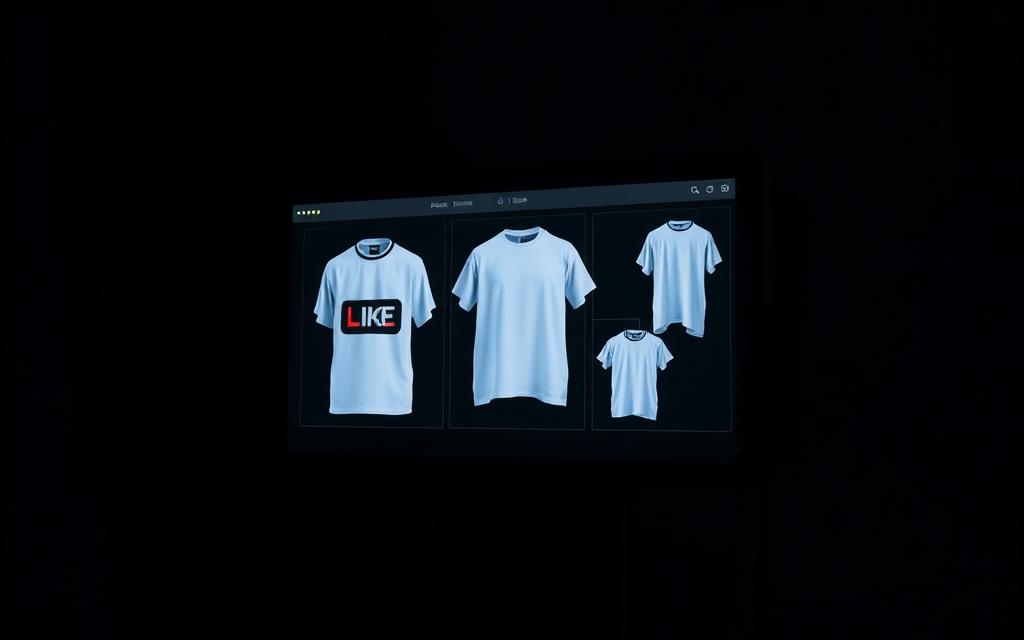
Custom Merch Personalization: Let Customers Design
Storefronts that let customers personalize products see 2-3x higher conversion rates. Here's how AI-powered personalization works and why it's the future of custom merchandise.
Beyond "Put Your Name on It"
For the past decade, the print-on-demand (POD) industry has been stuck in a narrow, uninspiring definition of mass customization. Traditional product personalization meant typing your name into a text field, limiting it to 12 characters, and seeing it rendered in one of three web-safe fonts on a generic white mug or unisex t-shirt. It was a neat novelty at first, but it rarely felt genuinely bespoke or premium. If you wanted custom apparel that actually looked like a professional piece of art, you had to hire a graphic designer, pay hundreds of dollars in setup fees, and endure a multi-week back-and-forth approval process.
AI-powered personalization goes dramatically further, completely tearing down the wall between consumer and creator. By leveraging multi-model AI capabilities—which intelligently blend the varying strengths of cutting-edge models like Stable Diffusion, Flux, and proprietary architectures—brands can now offer an immersive, high-end design studio directly within the browser experience. We are no longer limited to basic vector overlays or uploading unedited, desperately low-resolution phone photos.
Customers can now:
- Describe what they want in natural language and see it generated in real time, shifting from passive selection to active generation
- Upload their own images and have AI adapt them for print production, utilizing automatic background removal and stylized filters
- Remix existing designs — change colors, swap elements, adjust composition, and entirely alter the core aesthetic without touching complex design software
- Generate variations — prompt the system with "show me this in a more minimalist style, rendered as vintage line-art" and receive completely unique outputs
This evolution fundamentally changes the value proposition of custom merchandise. Instead of merely applying a label to an existing item, the user is directing an intelligent creative engine. Whether they want to generate a hyper-realistic cyber-punk portrait of their golden retriever to print on a premium heavyweight hoodie, or they want an art-deco inspired travel poster of their hometown for a wrapped canvas, the AI handles all the heavy lifting. It acts as the ultimate creative co-pilot, translating rough ideas into print-ready, high-fidelity format instantly.
The Shift from Passive Consumers to Active Co-Creators
To fully understand why generative AI merch is exploding, we have to look closely at massive recent shifts in consumer psychology and behavior. Over the last five years, algorithmic platforms like TikTok, Instagram Reels, and CapCut have trained everyday users to act as creators, not just passive consumers. People are deeply accustomed to remixing audio, dynamically filtering video, and applying interactive AI lenses to their daily content. That exact same psychological shift and expectation of interactivity has now aggressively hit e-commerce.
Modern shoppers don't just want to buy into a brand's established narrative; they want to seamlessly inject their own narrative into the brand. This phenomenon is deeply rooted in what behavioral economists call the "IKEA effect"—the powerful cognitive bias in which consumers place a disproportionately high value on products they partially created or assembled themselves. When a user spends five minutes iterating on prompts, tuning color palettes, and refining the exact atmospheric lighting of a graphic tee design on your store, that tee is no longer a $25 disposable commodity. It transforms into a tailored, highly valued reflection of their personal identity.
Furthermore, the recent democratization of multi-model AI completely evaporates the historical talent gap. A decade ago, the absolute barrier to high-quality user-generated custom apparel was a sheer lack of artistic talent. Customers *wanted* cool, edgy custom shirts, but their self-made designs in drag-and-drop editors looked amateurish, pixelated, and cheap. Today, advanced AI platforms bridge that talent gap completely. A consumer prompt as conceptually simple as "a minimalist, continuous-line drawing of a cup of coffee with a splash of neon pink" yields a retail-ready, flawlessly balanced graphic. By turning your storefront into a seamless blank canvas, you transform every single visitor from a passive, window-shopping buyer into an active, highly engaged co-creator.
Why Personalization Drives Revenue
The numbers are remarkably consistent and aggressively positive across the entire e-commerce sector:
- Personalized products convert 2-3x higher than static designs
- Average order value increases 20-35% when customers invest creative effort
- Return rates drop by 40% because customers feel absolute ownership of the design
- Repeat purchase rates climb — customers consistently come back to create more variations for friends and family
When dissecting these e-commerce metrics, the financial upside becomes impossible to ignore. A comprehensive consumer study by McKinsey recently highlighted that 71% of modern consumers not only expect personalized interactions but actually feel active frustration when brands fail to deliver them. In the direct context of custom product personalization, this frustration often translates directly to bounced traffic and abandoned carts. Conversely, when you replace stagnant PDF catalogs with dynamic, interactive AI-driven creation tools, your conversion rate optimization happens almost on autopilot.
Let's look specifically at Customer Acquisition Cost (CAC), which sits at an all-time high across Meta, TikTok, and Google ad networks. The traditional dropshipping or print-on-demand playbook relies on rapid-fire, costly testing of hundreds of static designs to find one magical "winner" that scales profitably. AI-powered personalization flips this costly model on its head. Instead of guessing exactly what niche the market wants today and burning through ad spend on inventory or design variations that flop, you simply let the customer generate exactly what they intend to buy. Your ad creatives no longer push a specific, restrictive design; instead, they pitch the *boundless capability* to create absolutely anything.
Additionally, the dramatic drop in return rates fundamentally shores up net profit margins. In traditional online fashion and e-commerce, size/color returns are a logistical nightmare that devour operational profitability. But personalized items are universally exempt from standard, no-questions-asked return policies due to their bespoke, unsellable nature. More importantly, because the customer engaged intimately in the generative design process, their satisfaction with the final physical product is heavily biased in a positive direction. They aren't just critiquing your store's hoodie; they are admiring *their own* masterpiece beautifully printed via your high-quality supply chain.
How It Works: The Technical Flow
Integrating AI-driven customization into a modern tech stack might sound incredibly complex, but modern API infrastructure handles the intense computational load completely invisibly. With robust endpoints accessible via our developers ecosystem, storefront operators don’t individually need to train their own machine learning models, license software, or manage expensive, overheating GPU server clusters. The user journey proceeds seamlessly:
- 1.They browse your base designs — the curated, stylistic collection you've pre-seeded with AI
- 2.They select a product and design — standard e-commerce flows so far, ensuring zero friction
- 3.The personalization layer opens — this is where things change dramatically
- 4.They modify the design using entirely natural language prompts with zero coding
- 5.AI generates a preview applied realistically on the actual product mockup in mere seconds
- 6.They approve and order — the high-resolution production file is generated completely automatically
Beneath the clean surface of this six-step process lies a highly sophisticated orchestration of background technologies. When the customer submits their natural language prompt in step four, the system isn't just generating a generic JPEG image. It is specifically formatting, filtering, and preparing that image for professional print-on-demand fulfillment. This intricate process means automatically running precision background removal tools, ensuring the color profiles critically match the specific print provider's CMYK requirements, and aggressively utilizing AI upscaling (often pushing images to 4K resolution) to translate a standard web-generated image into a flawless 300 DPI print-ready masterpiece.
This beautifully automated, AI-driven supply chain completely eliminates the conventional friction and expensive overhead of custom commercial orders. In the past, a human graphic designer had to meticulously open customer-uploaded files, fix pixelated rendering artifacts, center the graphic on a digital template, and send a manual PDF proof back to the buyer—a workflow that took 48 hours and completely destroyed operational scalability. By automating the strict quality assurance and file preparation logic, modern businesses can confidently process 10,000 custom, highly unique orders a day just as smoothly as they process ten.
What Customers Can Personalize
- Color palette changes — "make this entire graphic in muted earth tones" or "recolor to match my exact local hockey team's colors"
- Style adjustments — "render this more vintage and distressed," "make it much cleaner and more modern," or "add heavy impasto oil paint texture to the background"
- Element swaps — "replace the mountain range with a crashing ocean wave" or "swap the sports car out for a classic 1970s motorcycle"
- Text integration — names, important dates, inside jokes, and custom phrases integrated naturally with perfect typography alignment
- Layout modifications — "make the central graphic 30% larger," "seamlessly pattern this across the whole shirt," or "move the main illustration to the upper back"
The true scope of personalization extends far beyond basic novelty tweaks. Advanced storefronts running on GetSupermodel.ai are directly allowing users to tap into precise, intricate stylistic control that previously required a master's degree in fine arts. Exploring these deeply integrated e-commerce features guarantees that no matter what highly specific aesthetic a customer is chasing, your storefront can deliver a flawless result that matches their imagination pixel for pixel.
Choosing the Right AI Infrastructure for Your Storefront
Not all AI image generation setups in the market are created equal. If you are building a genuinely interactive design studio for retail consumers, the underlying infrastructure will ultimately make or break the customer experience. A very common, costly mistake emerging brands make is attempting to simply white-label a single, rigid AI model. The glaring issue with single-model architectures is that they suffer from massive stylistic bias—they might be unbelievably excellent at hyper-realism and photography but absolutely terrible at flat 2D vector art, legible typography, or anime-style illustration generation.
This is precisely why utilizing a multi-model AI image and video generation platform is critical for commercial scale. By intelligently routing different user text requests to the specific specialized models best equipped to handle them, you ensure a frictionless, zero-defect rate in the customer's creation loop. Speed is another massive, non-negotiable factor. If a prospective customer cleverly alters a text prompt and has to anxiously wait 45 seconds to an entire minute for a newly rendered mockup to load, they will close the tab and bounce. Modern commercial multi-model APIs drastically reduce this image latency to mere seconds, perfectly maintaining the magical momentum of the creative process without inducing cart abandonment.
Furthermore, transparent cost predictability is incredibly paramount when scaling an AI-first e-commerce business. Massive spikes in viral, user-generated content from a trending social media post shouldn't inadvertently bankrupt your monthly API credits. By logically structuring your digital backend with completely transparent, scalable pricing tiers, you definitively ensure that the net profit margin on every single custom t-shirt, wrapped poster, or ceramic mug remains highly lucrative—even when meticulous customers decide to iterate on their prompt designs twenty times before finally checking out. Building on a highly stable, proven infrastructure ensures maximum uptime during Q4 holiday rushes, which is undeniably when personalization platforms experience their highest, most profitable volume.
Real-World Results
A lifestyle apparel brand recently operating on Supermodel's cutting-edge storefront platform tracked these verified results roughly 60 days after completely enabling natural language personalization:
- Conversion rate: 2.1% → 5.8% (a massive 176% increase from baseline)
- Average order value: $38 → $52 (solid 37% increase)
- Products per order: 1.4 → 2.1 (showing increased cart packing)
- 30-day repeat rate: 8% → 19% (proving the habit-forming nature of generation)
These metrics aren't just exciting incremental growth; they represent a fundamental, permanent business transformation. This specific lifestyle brand, focusing heavily on premium contemporary urban streetwear, struggled previously with soaring customer acquisition costs and an expensive catalog of static designs that felt frustratingly identical to a dozen similar competitors. By aggressively pivoting to an interactive, AI-driven model, they essentially and effortlessly crowdsourced their entire creative direction to the market. They no longer had to blindly guess what neon colors or vintage aesthetics were trending each week because the customers themselves were generating exactly what they deeply desired in real-time.
Personalized products on this platform also generated 3x more social media shares — enthusiastic customers proactively posted their custom creations organically, driving highly qualified, zero-cost organic traffic right back to the store. When a customer receives an organic real-world compliment on their jacket and can genuinely say, “Thanks, I actually designed it myself using AI on this website,” it creates an unimaginably powerful viral loop. The customer instantly becomes an active, unpaid affiliate and highly trusted brand ambassador. The brand intelligently capitalized on this momentum by running incredibly successful TikTok ad campaigns specifically highlighting fast-paced screen-recordings of the AI generation process. Showing the instant, magical transformation from an awkwardly simple text prompt to a stunning, wearable piece of high-street clothing proved to be an irresistible hook.
The Competitive Moat
Once a customer has excitedly created a highly personalized design on your storefront, they're deeply emotionally invested. Every single custom creation generated is unique to your specific platform—it physically and digitally cannot be comparison-shopped because it literally does not exist anywhere else in the world.
In the brutally modern e-commerce landscape, standard drop-shipping is a horrific race to the absolute bottom. If you sell a beautifully generic printed t-shirt or a standardized, nice piece of canvas wall art, a competitor equipped with basic tools can simply right-click your flagship product image, upload it over to their identical Shopify store, and effortlessly undercut your retail price by two dollars. Consumers have become incredibly, ruthlessly savvy; they utilize browser tools to reverse-image search your products and will happily buy them from whichever faceless supplier offers the absolute lowest landed price. Standard storefronts offer mathematically zero defensibility against aggressive global pricing algorithms.
AI-driven personalization completely short-circuits this massive vulnerability. When integrated properly, your product is no longer just the final shipped physical item; your unique product is the addictive *experience* of creation. A cheaper competitor simply cannot undercut a distinct memory, a feeling of creative pride, or a uniquely, perfectly generated piece of art that a user spent 15 joyful minutes perfecting directly on your proprietary platform. By successfully transitioning from a highly replaceable retailer to a truly irreplaceable creative facilitator, you lock in long-term customer loyalty and establish an impenetrable brand moat that is practically impossible for copycats to clone. You are quite literally building habit-forming e-commerce. For more deep-dive insights into exactly how to leverage these specific strategies to outmaneuver traditional retail giants, regularly checking our industry blog will keep you safely on the absolute cutting edge of the generative merch revolution.
*Enable personalization on your storefront today. Launch with Supermodel — let your customers become your designers.*
--
Frequently Asked Questions
How does personalized merchandise enhance customer engagement and brand loyalty?
Personalized merchandise fundamentally transforms customer engagement by shifting the shopper's role from a passive buyer to a deeply active co-creator. When customers utilize seamless AI tools to generate highly bespoke designs—whether translating their specific, quirky ideas into high-resolution graphic tees or finely customizing the exact color palette of a canvas portrait—they invest tangible time and emotional energy into the product. This actively triggers the "IKEA effect," a well-documented psychological phenomenon where people place significantly higher intrinsic value on items they physically or digitally helped create. Consequently, the final manufactured product reflects their completely unique identity, deeply anchoring them to your brand experience. Because their hyper-customized design literally does not exist on any other website, they are far less likely to comparison-shop or defect to cheaper competitors. This elevated, undeniable sense of ownership naturally fuels supreme customer satisfaction, leading to a dramatic increase in repeat purchase rates and invaluable, highly organic social media marketing.
What impact does custom product personalization have on e-commerce conversion rates?
Integrating interactive custom product personalization into an e-commerce storefront consistently drives massive, data-backed improvements in conversion rates, very often multiplying them by two to three times when compared directly to static online catalogs. Traditional online shopping forces consumers to reluctantly settle for designs that are merely "close enough" to their actual preferences, which inevitably leads to crippling buying hesitation, endless tab browsing, and ultimately, absolute cart abandonment. Advanced AI product customization tools completely eliminate this friction by allowing users to exactingly dictate the specific style, texture, typography, and mood of the product in beautiful real-time. By perfectly bridging the gap between what a customer distinctly envisions and what is available for immediate purchase, you easily remove out-of-stock limitations and common design fatigue. Furthermore, instant visual feedback from high-resolution AI mockups builds tremendous, rock-solid purchasing confidence. Their intent to buy safely skyrockets because zero compromises are required.
In what ways can AI product customization tools simplify the personalization process for businesses?
For modern e-commerce businesses, AI product customization tools completely eradicate the notorious traditional bottlenecks tightly associated with bespoke manufacturing and manual graphic design processing. Historically, offering truly customized merchandise forcefully meant hiring an entire team of designers to constantly, manually review low-resolution customer uploaded images, tediously correct misspelled text, awkwardly adjust file centering, and slowly send PDF proofs back and forth over several agonizing days. Today, multi-model AI generation platforms seamlessly handle this entire complex pipeline instantly and completely autonomously. The advanced AI can flawlessly process incredibly natural language prompts, instantly generate stunning, high-fidelity aesthetic variations, and cleanly auto-format the final high-resolution output to perfectly meet strict print-on-demand provider specifications—including automated, perfect background removal and intelligent pixel upscaling to required print DPIs. By fully automating the costly transition from consumer thought to a commercial print-ready file, businesses can reliably process thousands of customized orders instantaneously.